Method
The capsule, reconsidered.
A capsule wardrobe isn’t about owning less. It’s about knowing what you own — thirty pieces you can see beat three hundred you can’t.

The capsule wardrobe has been sold as an exercise in subtraction. Thirty-three items. One bin bag. A weekend of ruthlessness followed by a year of quiet regret about a coat.
The subtraction is not the point, and treating it as the point is why most capsule attempts fail in about six weeks. The point is visibility.
The real problem is a display problem
A wardrobe is a column. Pieces hang one behind the other, and you interact with roughly the front fifteen centimetres of it. Everything behind that exists in the same way a file exists on a drive you never open — technically owned, practically gone.
This is why the same 20% gets worn. Not because the rest is bad, but because the rest is invisible, and invisible things do not get chosen.
Cutting the wardrobe to thirty pieces does solve this, in the crudest possible way: with thirty pieces, everything is in the front fifteen centimetres. But you can get the same effect without the bin bag, and keep the coat.
Thirty pieces you can see beat three hundred you can’t.
Run a back-row week
Before deciding anything, do this. For one week, wear only pieces from the back of the wardrobe — the ones you have not worn this season. No purging, no decisions, just wearing.
Three things happen, reliably:
- Some pieces come back to life. You had simply forgotten them, and they were fine. These are pure recovered wardrobe.
- Some pieces reveal why they were in the back. They itch, they don’t fit, the colour is wrong. Now you know, and the decision makes itself.
- Some pieces need one thing. A hem, a different shoe, a top that goes with it. Cheap to fix, and previously invisible as a problem.
Most closets shrink themselves once they’re visible. The pieces that go are the ones you actively disliked wearing, which is a much more reliable signal than the ones you failed to imagine wearing while standing in front of a rail on a Sunday.
Then build the capsule outwards, not downwards
Instead of asking what to remove, ask what the core is. Look at the last month of worn counts and find the pieces that show up constantly — usually a bottom, two tops, a layer, and a pair of shoes. That is your real capsule, discovered rather than declared.
Everything else is either a satellite (works with the core, keep) or an orphan (works with nothing, and now you can see why it never gets worn). Orphans are the actual target. Not volume.
A capsule that survives contact with a year
Two habits keep it working:
- Count the wears. A piece that has been worn twice since February is telling you something, and it is not telling it any louder next year.
- Photograph new pieces on day one. A piece that never enters the catalogue goes straight to the back row, and the whole problem starts again.
Why an app rather than a spreadsheet
People have tried spreadsheets. They do not survive week two, because logging is work and the payoff is deferred. A digital wardrobe works because the logging is the payoff: photograph a piece and it becomes a cut-out you can style with, on a page where the whole wardrobe is visible at once.
Thirty seconds of work produces a wardrobe you can scan in ten. That is the trade that makes the capsule idea finally stick — not the bin bag.
Pieces in this note
Trousers 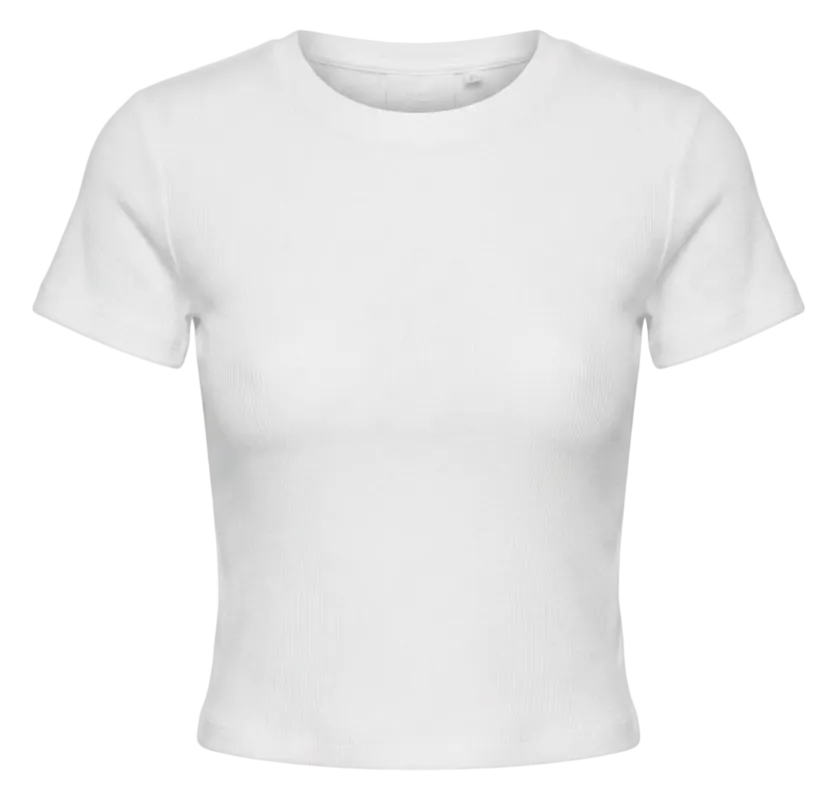
Tops 
Outerwear 
Knitwear
Questions
How many pieces should be in a capsule wardrobe?
There is no correct number. The useful target is not a count but a condition: can you see everything you own in about ten seconds? A visible wardrobe of sixty pieces gets worn more evenly than an invisible one of thirty.
How do I start a capsule wardrobe without throwing things away?
Run a back-row week — for seven days, wear only pieces you have not worn this season. Some come back to life, some reveal exactly why they were forgotten, and some just need a small fix. The decisions make themselves, from evidence rather than guesswork.
Why do I only wear the same 20% of my wardrobe?
Because a wardrobe is a column and you only interact with the front of it. The other 80% is not worse, it is invisible — and invisible things never get chosen. Making the whole wardrobe visible at once fixes the rotation without removing anything.
Do capsule wardrobes actually work?
The visibility part works and lasts. The restriction part usually does not: most people abandon a strict item limit within a couple of months. Keeping the wardrobe catalogued and tracking worn counts delivers the benefit without the purge.